
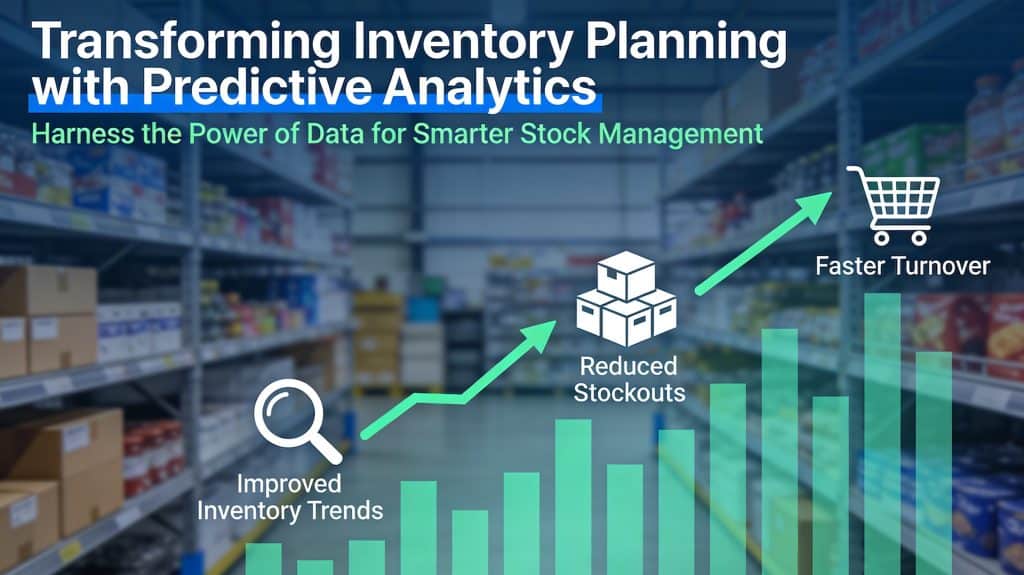
I am sure you may have once stared at empty shelves and thought, “Why didn’t we order more?” Or maybe you’ve tripped over excess stock cluttering your warehouse. These common headaches are exactly why predictive analytics is becoming a must-have for businesses of all sizes.
In this article, we will discuss how this tech is transforming inventory planning. You don’t need to have a crystal ball to do it.
What Is Predictive Analytics in Inventory Management?
Predictive analytics is the use of past data to predict what might happen next. It means using numbers to predict what customers will buy before they even know they want it. And this works very well for those who manage large inventories,
Small and medium businesses can use this tech to:
- Cut storage costs by keeping less extra stuff
- Stop running out of popular items
- Move inventory faster
- Make smarter choices about what to buy and where to put it
And here’s the best part: you don’t need a huge budget to begin. You don’t need a math degree either. You need a simple plan and the will to start.
Demand Forecasting: The Crystal Ball of Business
Good inventory planning starts with knowing what people will buy. Predictive analytics looks at your sales history and buying patterns. It can also watch external clues, such as the weather. That way, you can plan stock with fewer surprises.
Amazon does this on a massive scale. They process mountains of data to predict what items you’ll want and when. And that is one of the reasons why they rarely run out of stock on popular items!
But for smaller businesses, even the basic forecasting can work wonders. One clothing store used simple predictions to cut stockouts by 20% during busy seasons. They stopped guessing and started knowing what would sell.
Getting Stock Levels Just Right

If you have too much inventory, then you waste money on storage and risk items going bad. And if you have too little, the customers will get mad when you can’t fulfill the orders. In this situation, predictive analytics helps find that sweet spot.
The system looks at:
- How much did you sell before
- Busy seasons and slow times
- How long does it take to get more stock
- What it costs to store extra items
Smart Regional Planning
If you have many stores or warehouses in different locations, predictive analytics can tell you what to stock where, since not all locations need the same items!
The system checks:
- What sells best in each area
- Shipping costs between locations
- How much each place can hold
- How fast customers expect delivery
This is not just for big companies anymore. Local chains with just a few locations can also use these tools. A small hardware store group with three locations saved big on delivery costs by putting seasonal items in the right stores at the right times.
How to Get Started Without a Data Science Team

Here’s how to begin if you are ready to try predictive analytics
1. Gather Good Data
Start by collecting clean and accurate info about:
- Sales records – what sold when
- Customer habits – who buys what
- Supply details – how long orders take
- Outside factors – seasons, events, trends
If you put bad data, then it will give bad predictions. And so fix any errors in your records first!
2. Pick the Right Tool
You don’t need math for basic forecasts:
You can start simple initially. And even this will work great, and you will start to see greater improvements. You can always get advanced tools later as you grow.
3. Test and Improve
Check how well your predictions match reality:
- Aim for less than 10% difference between predicted and actual sales
- Look for big improvements in how fast inventory moves
- Track if you’re running out of stock less often
Just rise and repeat, and over time, you will notice the predictions start to improve and become more accurate.
Tips for Success
Below are some tips you can use to optimize your success even further.
You will need to connect your prediction tools with your current systems. And this lets data flow automatically without needing any extra work.
You can also train your team to read and use the data. The best system fails if nobody knows what to do with the insights!
And finally, keep on improving your models. Set up monthly check-ins to see what’s working and what’s not working, and fix what isn’t.