
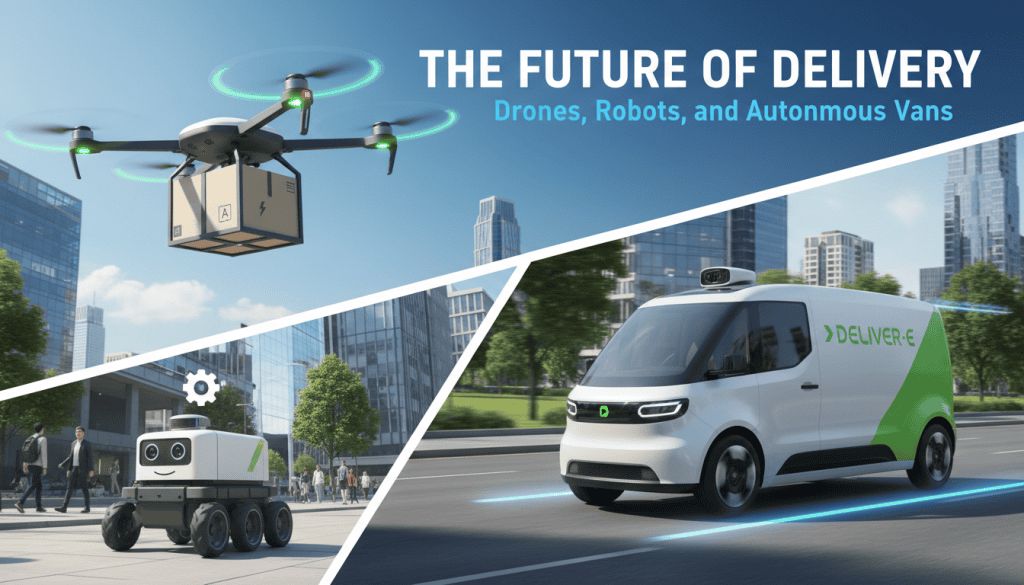
Ever ordered something online and wished it arrived fast? You’re not the only one. Free shipping has recently pushed a lot of online purchases. Same-day delivery is also gaining momentum and is the future. But the stores still have bills to pay. Drivers, trucks, and even failed drop-offs cost money. And in this scenario, a new delivery tech steps in.
The Delivery Revolution is Here
Technology has entered the delivery business. A tiny robot can now roll up to your house with your pizza. Or a drone drops a package right on your porch. It does sound like a sci-fi movie. But the fact is that it’s happening right now!
Companies are racing to adopt these new technologies because, in 2026, customers won’t just want fast delivery; they’ll expect it. And these smart machines might be the answer to this problem.
Autonomous Vehicles
Self-driving delivery vans are already hitting the streets. These clever vehicles can:
- Work 24 hours a day (no lunch breaks!)
- Find better routes to avoid traffic jams
- Fit through tight spaces that regular trucks can’t
Now these robo-cars can drop off packages in any neighborhood. It does seem straight from a movie, but it’s real!
Drones
Drones are the future now. They are cheap and get the job done. Drones can now deliver everything from pizza to medicine!
The greatest advantage of drones is that they fly over traffic. And that is huge! Amazon, Walmart, and Domino’s Pizza use drones in some test areas because flying saves time. The route is often shorter, too. So the package can reach you faster.
Drones also use electricity, and that can save money. This is because delivery trucks use fuels that cost a lot of money. But drones have some disadvantages too. They cannot yet carry heavy loads. Their batteries can drain quickly, leading to crashes. And this can cause accidents in the neighbourhoods.
Robots
You may notice delivery robots on sidewalks. They usually roll along at a brisk walking speed. They have cameras and sensors that help them to avoid obstacles. Their greatest advantage is that they can follow mapped routes.
Amazon and Coca-Cola have already started to use robots for delivery programs. Starship and Kiwibot also deliver food on college campuses. Robots can learn from each trip. They can also handle bumps and turns better over time. They also get better at timing, so your food shows up warm more often.
Bumps in the Road
Of course, all this tech faces some problems:
- The rules are not fully set yet. Drones can raise questions about airspace and privacy. Robots raise questions about sidewalks and crosswalks. Until cities set clear rules, rollouts might stay slow.
- And city design matters too. Drones need safe places to land. Robots need charging areas. Self-driving vans also need safe routes. Without those changes, delivery tech hits the same old roadblocks, just with new wheels.
- Each machine has some limitations, too. Drones can’t deliver heavier loads, and robots might also struggle with stairs or rough terrain.
Making It Work
For these technologies to really take off, we need the following:
- Better public education so people understand these new delivery methods
- Clear rules about where and how these machines can operate
- Smart choices about which technology fits each delivery job
- Teamwork between companies and cities to build the right paths, charging spots, and landing pads
What’s Next?
But it cannot be denied that the future of delivery is getting closer. You may soon get packages with little human contact.
And the payoff can be big too. For example, delivery can get faster, costs can drop as systems scale, and emissions can drop if fewer trucks run all day. And most importantly, you also get your delivery faster. So be prepared for this to happen soon.