
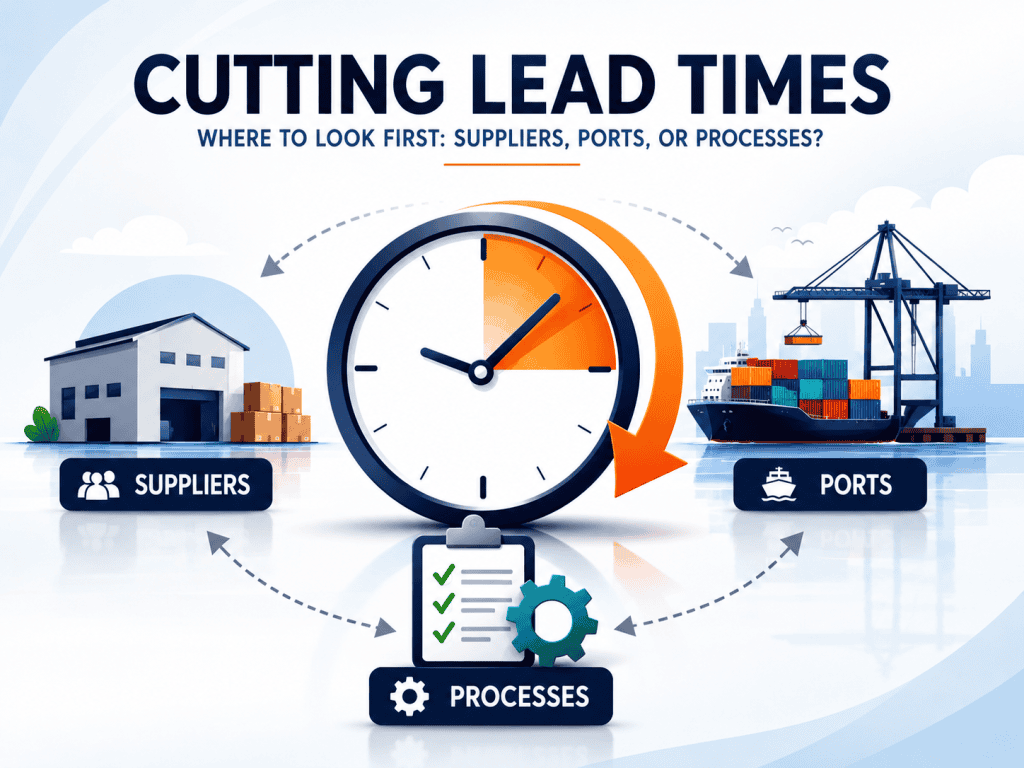
Lead times are sneaky. They are great on paper, right up until the moment they’re not. A delay here, a bottleneck there, and shelves are bare, and customers are frustrated.
So where do you start? Suppliers? Ports? Your own internal processes? The answer is all three. Before you start plugging holes, you need to find out where your biggest leak is coming from.
What Lead Time Actually Means
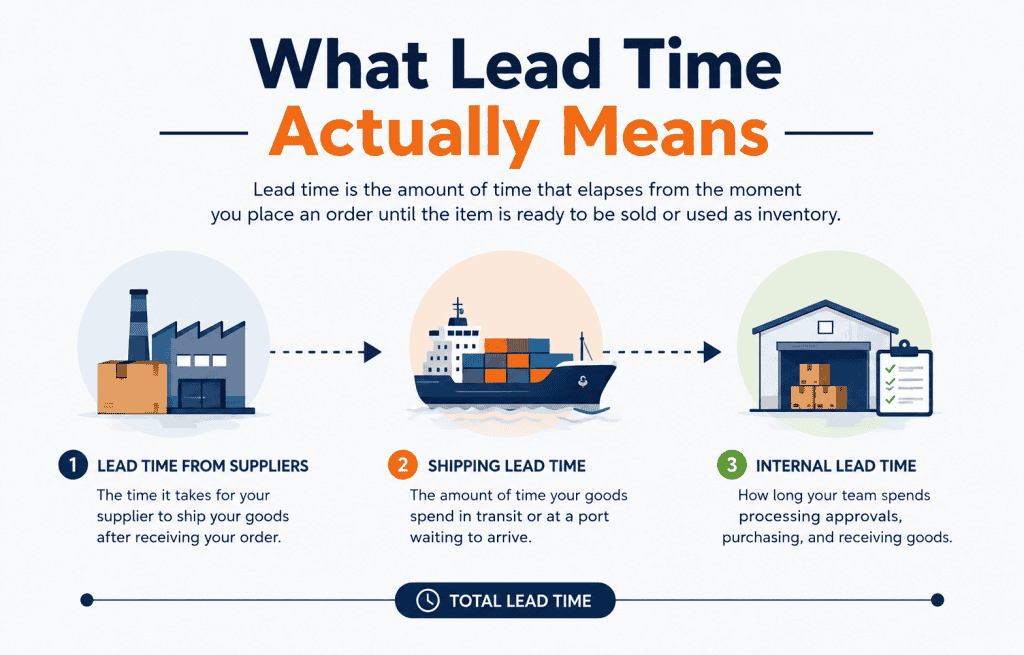
Lead time is the time between when you place an order and when the item is ready to be sold or added to inventory. It can be divided into several categories:
- Lead time from suppliers: the time it takes for your supplier to ship your goods after receiving your order.
- Shipping lead time: the amount of time your goods spend in transit or at a port waiting to arrive.
- Internal lead time: how long your team spends processing approvals, purchasing, and receiving goods.
All three of these areas can negatively impact your lead time. Figure out which category is most detrimental to your business.
Start With Your Suppliers
Lead time often starts with suppliers. A vendor that is slow to ship will require you to keep more safety stock on hand. That uses up cash and complicates inventory planning.
The solution is not always finding a new vendor. Communication can help too. You need to send them sales forecasts and also give advanced notice of large orders. Suppliers can better plan when they know what to expect.
Here’s what to check with your vendors:
- Are they hitting their promised delivery dates?
- Do they go quiet when something goes wrong?
- Are their minimum order quantities hurting your cash flow?
- Could a nearby supplier replace a faraway one?
If you have a supplier who is consistently underperforming, you will need to mend fences or replace them. Comforting yourself with the belief that the vendor relationship is just too difficult to change is one of the most costly habits in supply management.
In fact, most companies don’t measure vendor performance objectively. They wait for crises to occur. Create a simple rating system. Measure timely delivery. Review regularly. You’ll clearly see whom you can depend on and whom you can cut loose.
Port Congestion and Shipping Delays

Port delays are a real headache. You can’t always control them. Ships get held up, customs slow down, and containers sit in a yard for days. That’s just global shipping for you.
But you can plan around it:
- Buffer your lead times on busy trade routes to absorb port delays
- Look at air freight for urgent or high-value items when sea shipping is too risky
- Consider nearshore suppliers to cut transit time altogether
Nearshore sourcing is worth a serious look. Unit costs might be a bit higher. But shorter transit times mean less cash tied up in goods on a ship. A storm, a strike, or a backed-up port won’t knock out your whole month’s supply. Know when sea freight works and when it doesn’t.
Your Own Processes Might Be the Real Problem
This is the part most people skim over. Sometimes your own processes are the largest bottleneck.
Imagine an order comes in. It gets manually typed into your system. Then it gets approved. Then it goes to the warehouse. There are multiple points of contact where something could go wrong. Missed email, slow approval, data entry error. Multiply that by several orders a day.
Some fixes that actually help:
- Automate order entry so nothing waits in someone’s inbox
- Set clear approval rules so orders don’t stall at the same desk every time
- Keep inventory data live and accurate so your team works from real numbers
- Standardize how every order flows from start to finish
Inconsistent processes are a quiet killer. Two people handling the same order in different ways doubles the chances of a delay. Pick one process, train your team on it, and stick to it.
Inventory Planning and Lead Times Go Together

Lead times have a big impact on how severely delays can affect your business. If your reorder points are too low and your safety stock is off, even minor vendor delays could devastate your inventory. Most procurement organizations don’t see the correlation at all.
Here’s a formula. Calculate your expected sales for the lead time period. Add that to your safety stock. There’s your reorder point. Review this frequently. When your lead times change, it is normal for your reorder points to shift as well.
Stagnant safety stock is dangerous. Just because you calculated “X” amount of safety stock last year, doesn’t mean it’s adequate for your supply chain now. And so you will need to review and adjust frequently.
Use the 80/20 Rule
Don’t treat all products equally. Identify the top twenty percent of products that account for eighty percent of your sales. These products are where lead time issues will do the most damage. Monitor their reorder points, safety stock levels, and supplier performance metrics closely. Allow lower-tier products to ride the rules.
It ensures your team is prioritizing the products that move the needle.
Bring It All Together
Cutting lead times drastically means working on 3 areas simultaneously: suppliers, shipping, and your internal processes. You learn where most of your delays actually originate. Then fix that first.
You will also need to track your progress and revise safety stock as conditions change. View everything again a few months later. Supply chains shift constantly. What you fix today might need fixing up in the next quarter!
For this reason, reducing lead time is an ongoing habit, not a one-time fix.